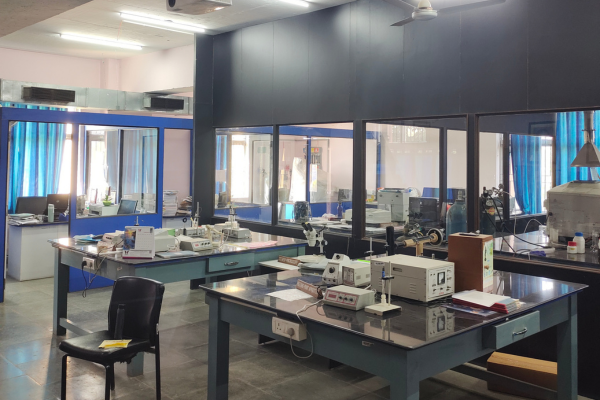
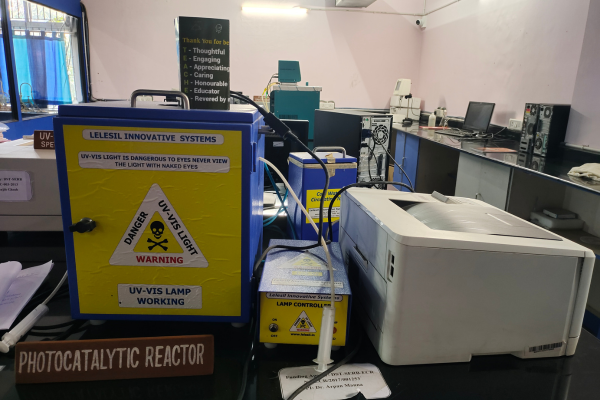
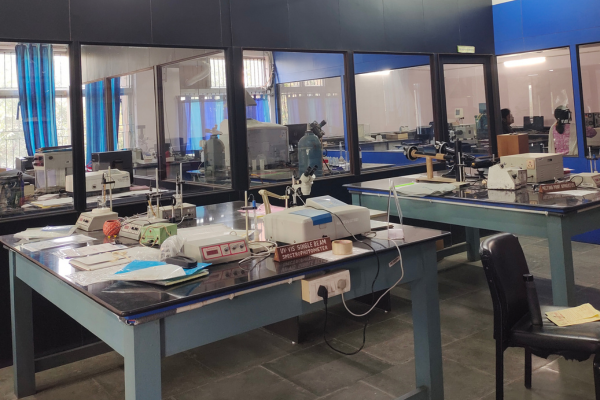
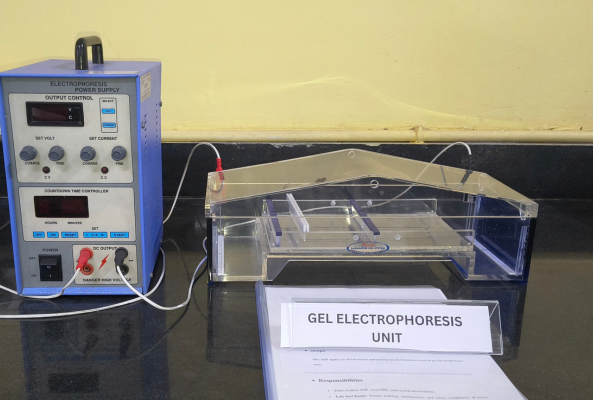
The Department of Physics maintains a vibrant and diverse research ecosystem spanning experimental, theoretical, computational, and applied physics. Faculty members actively contribute to condensed matter physics, thermoelectric materials, microwave and terahertz electronics, photonics, nuclear and particle physics, high energy physics, astrophysics, solid-state electronics, and interdisciplinary medical and technological applications.
Research in materials and condensed matter physics includes the synthesis and characterization of thermoelectric materials such as Bi₂Te₃, Bi₂Se₃, (Bi₁₋ₓSbₓ)₂Te₃, SnTe, and Half-Heusler alloys (e.g., TiCoSb). Studies focus on transport phenomena, efficiency enhancement, and topological properties, integrating materials development with device-level module fabrication. Complementary theoretical and computational investigations address non-Hermitian systems, quantum transport, mesoscopic physics, low-dimensional thermoelectricity, topological and quasiperiodic lattice models, and advanced numerical techniques including the non-equilibrium Green’s function method.
The department also has strong expertise in microwave, millimeter-wave, and terahertz electronics and systems, including terahertz detection, communication attenuation studies funded by the Ministry of Defence (Govt. of India), and THz pulse spectroscopy for biomedical diagnostics. Research contributions in COVID-19 detection using terahertz techniques received industry acknowledgment and media coverage. Work in medical instrumentation, medical imaging, AI-based screening systems, and solid-state electronics further reflects the translational dimension of departmental research. Innovations such as milk adulteration detection sensors and IoT-enabled aeroponics systems highlight societal and industrial relevance.
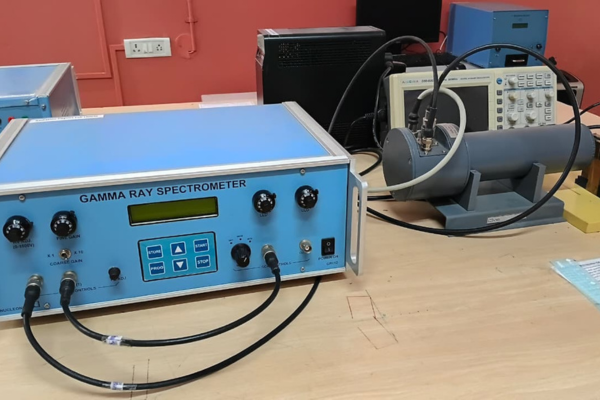
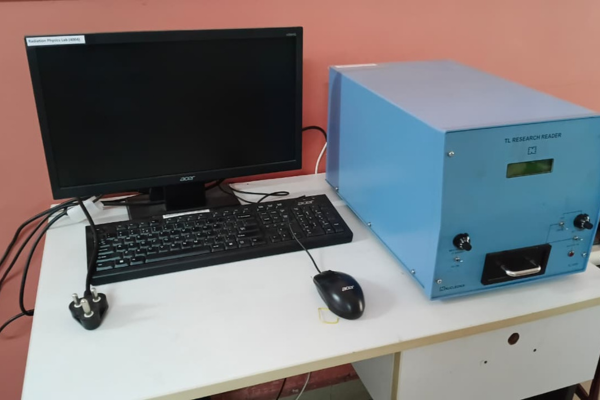
In nuclear, particle, radiation, and detector physics, faculty members conduct experimental and simulation-based research with applications in medical imaging, radiation dosimetry, and environmental monitoring. A SERB-funded IACSAM project focuses on atmospheric muon imaging of archaeological and civil structures. The department actively participates in international high-energy physics collaborations alongside theoretical research in high energy physics and astrophysics addressing particle interactions, gauge theories, and cosmological phenomena.
Faculty members publish extensively in reputed international journals such as Physical Review B, Physical Review C, Physics Letters B, The European Physical Journal C, Computer Physics Communications, Nuclear Instruments and Methods in Physics Research A, IEEE Transactions on Electron Devices, IEEE Transactions on Device and Materials Reliability, ACS Applied Energy Materials, ACS Omega, Materials Advances, and Annalen der Physik. The department has produced over 250 international journal publications with significant citation impact and numerous international conference proceedings.
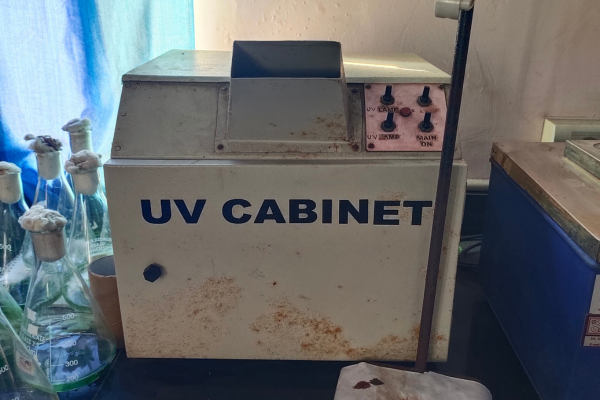
The department holds multiple granted patents in areas including UV sanitization devices, wearable infectious disease isolation systems, AI-based medical screening methods, and sustainable agricultural technologies. Research funding has been secured from major government agencies such as DRDO, DAE, DST, SERB, and UGC-DAE CSR, as well as private organizations.
Faculty members have received prestigious recognitions including multiple IEEE Best Research Paper Awards, Top Cited Author Award (IOP Sciences, 2024), CMS Award (2021), Breakthrough Prize in Fundamental Physics (ALICE Collaboration), Springer Nature – Her Research Our Future Prize (2025), SERB-SRG grant, Ramanujan Fellowship, and D. S. Kothari Postdoctoral Fellowship.
Through its multidisciplinary expertise, competitive funding, strong publication record, innovation output, and global collaborations, the Department of Physics continues to make significant contributions to fundamental research, advanced technology development, and national strategic initiatives.